How Engineering Colleges Are Updating Curriculum With AI & Digital Tools
March 5, 2026 2026-04-06 16:06How Engineering Colleges Are Updating Curriculum With AI & Digital Tools
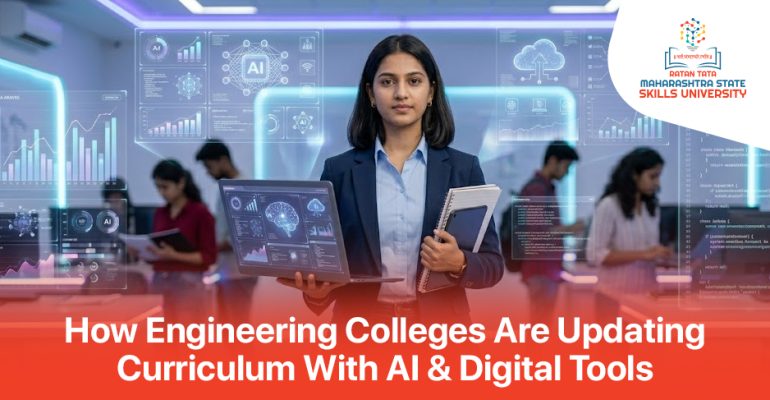
Because tech is moving so fast now, we’re seeing fresh ways to train engineers. Things like AI, IoT, machine learning, and automation are key for teaching engineering and using its ideas. These changes are moving how training is done in schools both in India and globally. Because of this, schools are updating what they teach to include new digital ways of learning. So, a good engineer now needs to know the theory and have practical skills to fix actual issues.
Just learning theory in school is not enough for what companies want. Businesses want engineers who can think well, code easily, and make systems that run smoothly. This article talks over how schools are adapting with AI and digital tools, what this means for engineers in training, and tips for companies and schools on keeping up with the future of great engineering by using tech well in training.
Why AI and Digital Tools Are Changing Engineering Education
Industry predictions and school surveys show some obvious trends:
- A recent survey found that over 60% of colleges in India now let students use AI tools, and over 50% use AI to create learning materials for regular classes, not just optional workshops.
- AI has gone from being a support tool to a must-have ability expected in engineering programs. Universities are adding AI, data analysis, and machine learning classes right into the required courses for a degree.
- All of the significant disciplines of engineering (at least from an AI perspective) will eventually require some sort of AI component embedded in their respective curriculum according to organizations such as the All India Council for Technical Education (AICTE).
Thus, future engineers will learn more than just the theory behind engineering. They’ll have hands-on experience with many of the same tools used in real life, including simulated software, digital labs, cloud-based artificial intelligence (AI) platforms and robotics project teamwork. Connecting what they study in school to what will be expected of them at work is essential for providing an effective educational experience for future engineers.
Main Areas of Course Changes
Engineering schools are updating courses in a few main areas:
AI and Machine Learning
New courses now include key AI subjects such as:
- Machine learning basics
- Neural networks and data modeling
- AI ethics and how it’s used
These aren’t optional. Many programs consider AI a basic subject that’s included in traditional courses, making sure students understand the technology and its ethical side.
IoT and Embedded Systems
IoT topics are being added to engineering courses, from smart sensors to connected systems. Students learn:
- How to communicate between devices
- Sensor networks
- Managing real-time data
Project-based labs and IoT kits are becoming normal for lab work.
Advanced Simulation and Virtual Labs
Simulation tools like MATLAB, ANSYS, and other digital engineering tools are now important for teaching experimental design, system modeling, and testing. These tools help students see concepts clearly and work on hard problems without needing expensive equipment.
Data Analysis and Cloud-Based Tools
Engineering students are also learning to:
- Handle real data
- Use cloud systems for processing
- Show engineering results visually
This brings data-based decision-making to the main engineering skill set.
Curriculum Updates Across Key Digital Tool Areas
| Curriculum Focus | What Students Learn | Benefits/Outcomes |
| AI & Machine Learning | Predictive models, ML pipelines, AI ethics | Prepares students for intelligent automation roles |
| IoT & Embedded Systems | Sensor networks, real-time analytics | Builds skills for smart systems and automation |
| Simulation & Virtual Labs | System modeling, design validation | Bridges theory and practice without physical constraints |
| Data Analytics & Visualization | Big data handling, outcome interpretation | Enables data-driven engineering decisions |
| Cloud & Collaboration Tools | Scalable development, remote projects | Aligns with distributed, hybrid work environments |
As the significance of digital engineering in the industry increases, the transformation of curriculum demonstrates this trend. Not only are students being introduced to the principles of digital engineering, but they are also getting to hands-on experience using the tools that power modern day engineering.
Examples of Curriculum Innovations in India and Globally
AI Integration with Engineering Programs
By 2025, the All India Council for Technical Education (AICTE) plans to add AI lessons to the main engineering courses. These lessons will cross different subjects and will be specific to each student’s major. Instead of a general AI intro course, civil or mechanical engineering students, for example, will learn how AI is actually used in their fields.
Hands-On Labs and Group Projects
Top schools are building advanced labs where students can use:
- Robotics kits
- IoT sensor arrays
- Real-time data platforms
These setups are closer to actual industry workplaces than old-fashioned teaching labs.
AI Policy and Educational Tools
A survey showed that over half of Indian higher education institutions now use generative AI to make learning materials. Many have added adaptive learning platforms and intelligent tutoring systems, which shows adoption of tools and structured policies for their use.
How This Affects Students & Job Prospects
Today’s engineering grads need more than just book learning. They should be:
- Problem solvers with a strong grasp of technology
- Comfortable with modern software
- Able to work with people from other fields
- Good with digital tools that boost industry progress
Colleges that update their courses to include digital skills give students a step up in:
- Being ready for jobs
- Having strong portfolios of hands-on projects
- Meeting what employers want in AI, automation, and data analysis
This isn’t just happening in India. India is a leader in adopting AI skills and has national policy support, which has helped many schools modernize their courses.
Problems and What’s Next
The changing of curriculum creates many challenges such as:
- Training teachers on digital tools.
- Investment in lab equipment and software
- Maintaining up-to-date knowledge of rapidly changing technology.
There are many smart ways to help schools quickly catch up, i.e. partnerships with industry,‐‐online teaching,‐‐teacher training programs in using digital tools.
As Digital and AI continue to be an integral part of society and industry; Then engineering instructors must provide students with the ability to adapt, because everything that is currently taught will either require some adaptation, or some level of skill/application of new technologies.
RT-MSSU: Encouraging Education for the Future
Ratan Tata Maharashtra State Skills University (RT-MSSU) prepares students for their careers by teaching digital skills needed for success. The university’s programs use artificial intelligence, lab work, corporate partnerships, and educational projects. This approach ensures engineers understand the material and can use current tools that mirror real-world needs. This skills-first method, influenced by industry input and project experience, helps graduates be adaptable and ready to drive progress in fields from robotics and automation to smart systems and IoT. RT-MSSU is ideal for students seeking to combine engineering principles with digital skills to learn at a rapid pace.
In Summary: Engineering Education Improvements
Using AI and digital tools in engineering transforms how future engineers are taught. Teaching has shifted from theory to methods that actively involve students. From simulation labs to AI platforms, from group modules to IoT projects, engineering education is changing to meet digital demands.
Schools that adopt this shift help students develop practical skills, problem-solving abilities, and confidence, which will help engineers stand out.
Frequently Asked Questions
How are engineering colleges using AI in their curriculum?
Answer: Engineering colleges are integrating AI through core modules, practical labs, data analytics projects, and AI-enabled learning tools across disciplines.
Why is AI important for engineering students today?
Answer:AI skills help engineering students solve complex problems, work with automation systems, and meet evolving industry and employer expectations.
What digital tools are commonly used in modern engineering education?
Answer:Common tools include simulation software, IoT platforms, cloud systems, data analytics tools, virtual labs, and AI-based learning platforms.
How does AI-based curriculum improve employability?
Answer:AI-enabled curricula build practical, job-ready skills, hands-on experience, and problem-solving abilities that align closely with industry needs.
How is RT-MSSU preparing engineers for digital-first industries?
Answer:RT-MSSU follows a skills-first approach by embedding AI, digital tools, industry projects, and hands-on training into its engineering programmes.